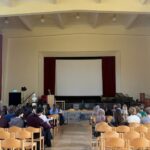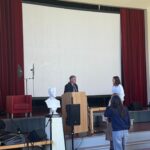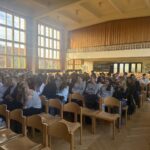

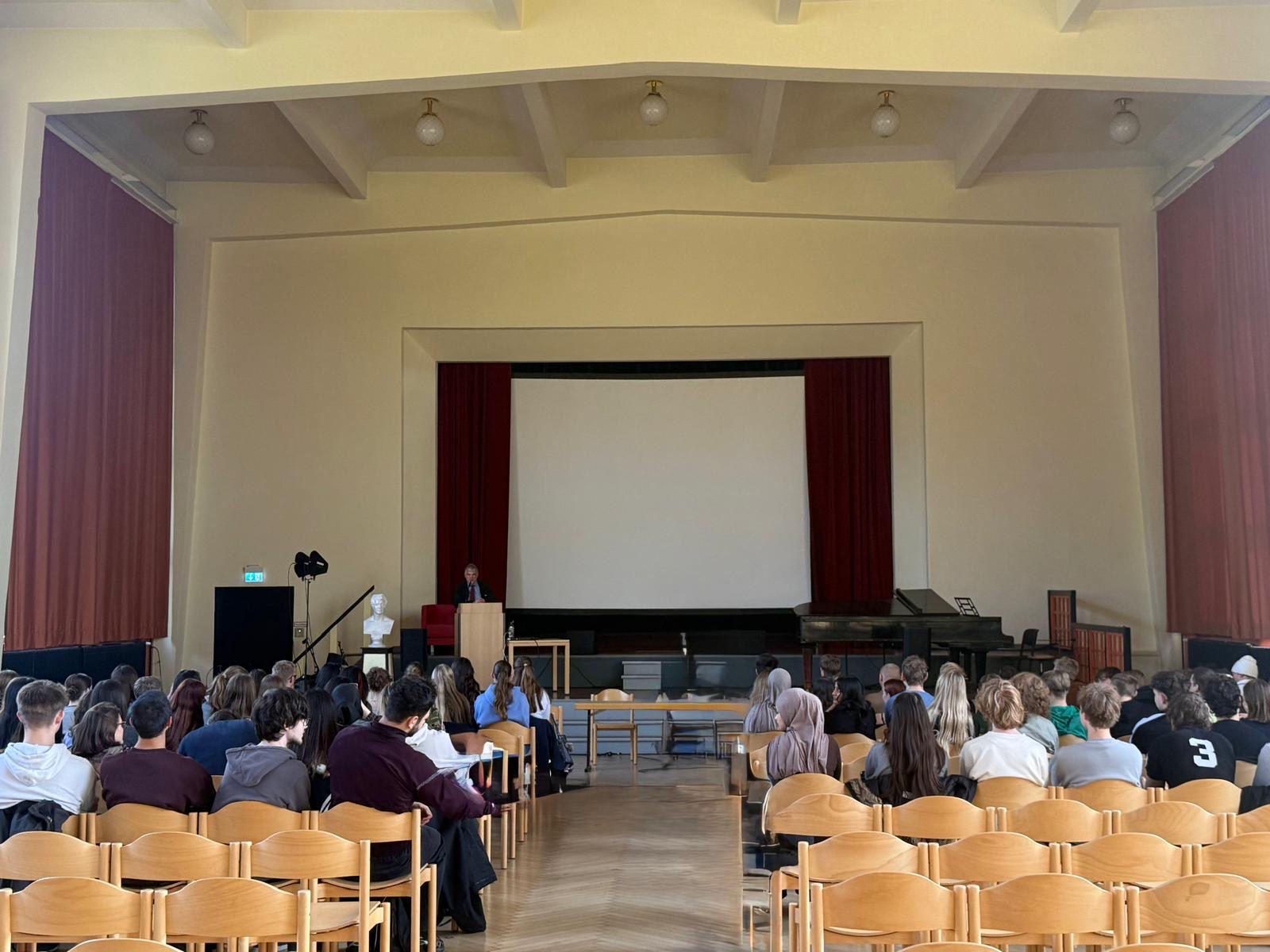

What does a diplomat’s everyday life actually look like? During a visit to our school, Ed Cox, Deputy Counselor for Public Engagement at the U.S. Embassy in Berlin, gave us a fascinating insight into his work and personal experiences. Having worked as a diplomat for 17 years, he explained what his job involves and how it affects his life abroad.
Cox described the different departments that keep an embassy running.
The consular section helps American citizens abroad for example when they lose their passports or get into legal trouble. It also processes visa applications for people who want to visit, study or participate in exchange programmes in the United States.
The management section takes care of practical matters, such as vehicles, buildings and accommodation for embassy staff.
Cox works in public diplomacy, which focuses on building relationships between the United States and the public in other countries. His department organises cultural events, promotes American music and films and uses social media to communicate with people.
For example, the embassy has organised outdoor film screenings featuring famous American musicians and supported events connected to American sports. Another important part of his work is facilitating international exchange programmes, which he believes help people overcome prejudices and understand other cultures.
However being a diplomat also comes with challenges. Diplomats regularly move between countries, and their first assignments are usually decided for them. Later, they can apply for positions in countries where they would like to work. These moves affect their families, too. Cox explained that bis children have had to change schools and leave friends behind.
Although this can be difficult, he believes that living abroad makes them more flexible and helps them build friendships around the world. The State Department also supports diplomats with housing arrangements, making frequent relocations easier.
Overall, the visit showed us that diplomacy involves much more than politics. It combines organisation, communication, cultural exchange and the ability to adapt to new environments.
Cox’s experiences gave us a better understanding of both the opportunities and the challenges of a diplomatic career.